|
Class 21-WW-SEWING & ADHESIVE BONDING METHOD |
 |
 |
.++ |
 How to make
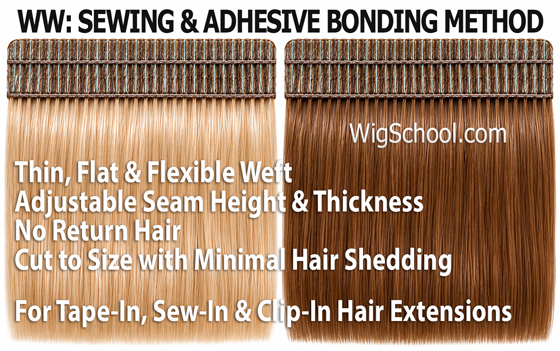
Skin Weft (PU Skin Weft, Seamless Skin Weft Hair Extensions, Invisible Skin Weft)
for Tape in Hair Extension System using a Sewing Machine and Adhesive Bonding

WW: SEWING MACHINE & GLUING METHOD
─ made with liquid glue for
Hair Extension System done with Double Sided Adhesive Tape.
Some people call this "Skin Weft"
 |
 |
A. Hands-On Training
1. Training Fee: US$2,000.00 per trainee
2. Training Period: 2 days (5 hours per day), even for complete beginners with no previous sewing machine experience.
B. Online Training
1. Training Fee: US$1,500.00, including shipping costs.
2. Training Materials and Supplies Provided:
2.1 Instructional Videos
2.2 Written Training Manual
The manual covers:
2.2.1 Hair Preparation and Stitching
-
How to prepare and align hair properly for stitching.
-
How to stitch hair using the correct machine settings and manual techniques.
2.2.2 Seam Height, Thickness, and Structure
-
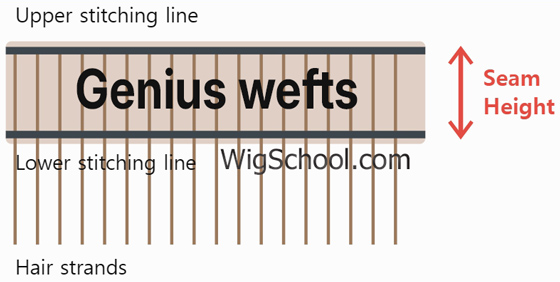
How to reduce the seam height by narrowing the distance between the upper and lower stitching lines.
-
How to reduce the seam thickness through mechanical adjustments, appropriate chemical treatments, and the selection of suitable materials.
-
How to adjust the seam structure, strength, and flexibility for different hair extension applications.
-
How to create small openings or perforations in suitable areas of the seam for specific installation methods.
2.2.3 Hair Quantity and Weft Thickness Control
-
How to mechanically adjust and control the amount of hair being stitched (weft thickness).
-
How to manually adjust and control the amount of hair being stitched (weft thickness).
2.2.4 Adhesive Application and Adjustment
-
How to apply the adhesive.
-
How to change the color of a clear (transparent) adhesive to brown, blonde, or other desired colors.
-
How to adjust the viscosity of the adhesive.
2.2.5 Adapting WW Wefts for Different Hair Extension Systems
-
How to modify the seam for beaded-row and sew-in installations.
-
How to adapt the seam structure for micro-link or beaded-weft applications.
-
How to prepare suitable seam areas for double-sided adhesive tape used in tape-in hair extensions.
-
How to modify the weft for clip-in and halo/wire hair extension systems.
2.3 Adhesive (Glue)
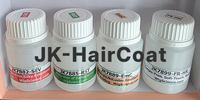
G749-STH (One-Component Adhesive) — 2 liters.
2.4 Accessories and Application Supplies
Accessories and supplies required for applying the adhesive.
2.5 Double-Sided Adhesive Tape
One roll.
2.6 Reference Materials for After-Training Technical Support
Reference materials to facilitate future questions, answers, and ongoing technical support after completing the training.
 WW Method: Versatile Applications for Different Hair Extension Systems
One of the advantages of our WW Method (Sewing & Adhesive Bonding Method) is that the seam area can be modified to accommodate various hair extension installation and wearing methods.
For example, the distance between the upper and lower stitching lines can be reduced to create a narrower seam (reduced seam height). Small openings or perforations can also be made in the seam area, depending on the intended application.
By adjusting the seam height, thickness, and structure, the WW method can be adapted for a variety of hair extension products.
1. Professional Salon Installation Methods
1.1 Beaded Row Installation (Hand-Tied / IBE / NBR Styles)
The weft is sewn onto a foundation row created with small beads attached to the client's natural hair. A narrower, flatter seam may help reduce bulk and improve comfort.
1.2 Sew-In with Braids (Cornrow Base)
The weft is sewn directly onto braided natural hair. The seam can be designed to facilitate stitching and provide secure attachment.
1.3 Micro-Link / Beaded Weft Installation (No Sewing)
The weft is attached to the client's natural hair using small beads instead of sewing. The seam structure can be adjusted to accommodate the selected attachment method.
1.4 Tape-In Sandwich Method
Double-sided adhesive tape is applied to the attachment area of two wefts, with a thin section of the client's natural hair placed between them.
For this application, the seam area can be designed to be narrower, thinner, and flatter to improve tape contact and reduce bulk.
2. Temporary / At-Home Wearing Methods
2.1 Clip-In Hair Extensions
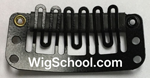
Small snap clips can be attached to the weft, allowing the user to install and remove the extensions conveniently.
2.2 Halo / Wire Hair Extensions
The weft can be attached to a thin, transparent nylon wire and worn around the crown of the head, with the client's natural hair covering the wire.
3. Manufacturing Flexibility of the WW Method
The WW method allows manufacturers to develop different hair extension products by modifying the seam area according to the intended application.
Possible modifications include:
-
Reducing the seam height by narrowing the distance between the upper and lower stitching lines.
-
Adjusting the seam thickness and flexibility.
-
Creating small openings or perforations in suitable areas of the seam.
-
Modifying the seam structure to accommodate sewing, beading, adhesive tape, clips, or wire attachments.
The appropriate seam design depends on the intended installation method, the materials used, and the required strength, flexibility, and durability.
One Basic Manufacturing Method — Multiple Hair Extension Applications.
With suitable modifications, the WW method can be adapted for professional salon installations as well as temporary, removable hair extension products.